
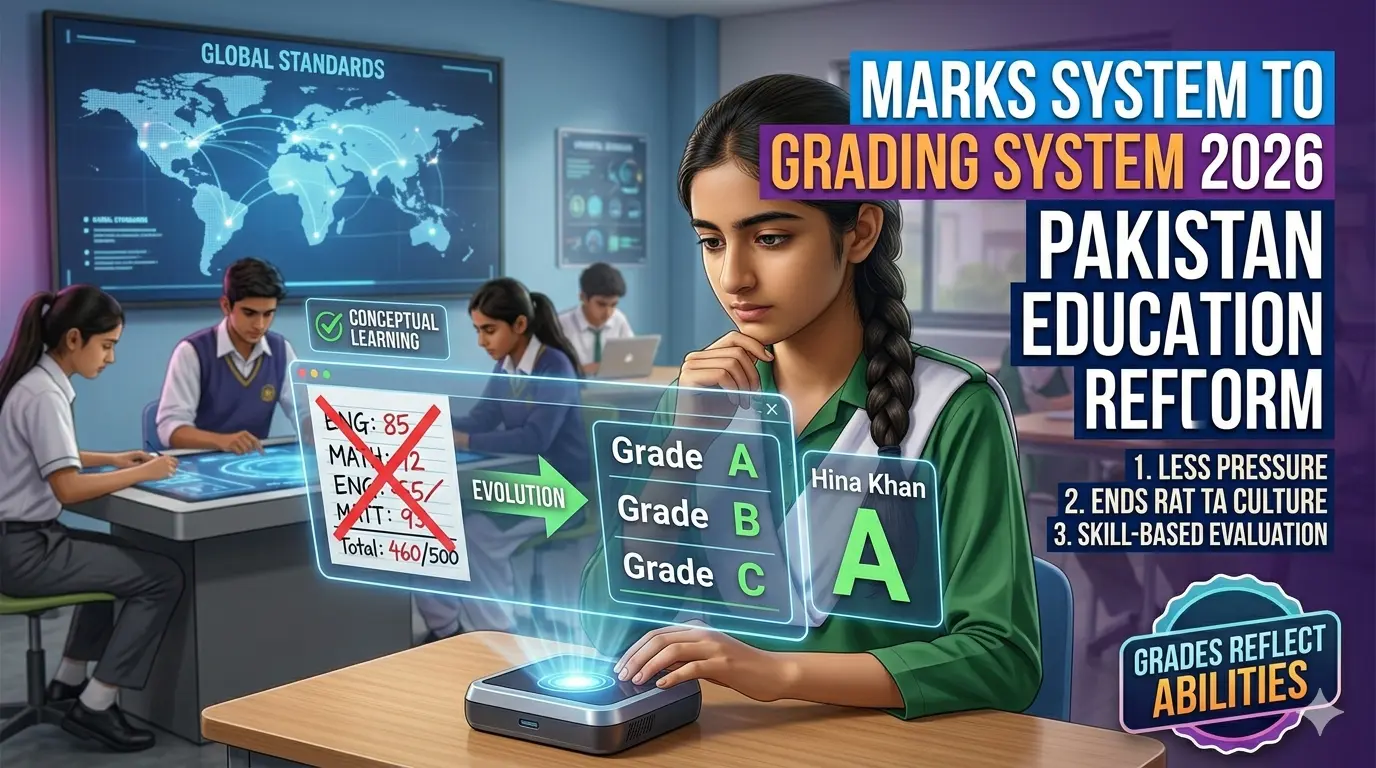
The shift from marks system to grading system 2026 is emerging as a major reform in Pakistan’s education structure in 2026. For decades, the education system in Pakistan has revolved around one central idea marks. Students have been judged by numbers 900 out of 1100, 95%, or sometimes even the difference of a single mark. In many households, report cards became a source of pressure rather than progress. Conversations around education often sounded like, “Kitnay marks aaye?” instead of “What did you actually learn?”

However, things are now beginning to change. This transition is not just about replacing numbers with letters like A, B, or C. It represents a deeper shift in mindset—from memorization to understanding, from pressure to performance, and from competition to capability.
Shift from Marks System to Grading System 2026
In today’s fast-changing world, students need more than just good marks. They need skills, creativity, critical thinking, and confidence. The traditional marks-based system often failed to measure these qualities. It rewarded students who could memorize content but didn’t always reflect true understanding or real-world abilities.
With the introduction of the grading system, the focus is gradually shifting toward a more balanced evaluation method. Instead of obsessing over every single mark, students are assessed based on broader performance levels. This helps reduce unnecessary stress and allows them to focus more on learning rather than just scoring.
In Pakistan, where academic pressure is already high especially in matric and intermediate levels this change can be a game changer. It has the potential to create a healthier, more practical, and student friendly learning environment.
What is the Marks System?
The marks system is a traditional method of evaluating students based on numerical scores. Each subject carries a fixed number of marks, and students are graded based on their total score.
Key Features:
- Numerical scoring (e.g., 85/100)
- Total marks calculation (e.g., 1050/1100)
- Percentage-based ranking
Limitations:
- Encourages rote learning (ratta system)
- Creates intense competition
- Ignores creativity and practical skills
- High stress over small mark differences
In simple terms, the marks system often measures how much a student can remember, not how well they understand.
What is the Grading System?
The grading system evaluates students using performance levels instead of exact marks. These are usually represented by grades like A, B, C, etc.
Example:
- A Grade = Excellent performance
- B Grade = Good performance
- C Grade = Average performance
Key Features:
- Focus on overall performance
- Reduced pressure on exact scores
- Encourages conceptual understanding
- Promotes balanced learning
This system is already widely used in many developed countries and is now being adopted in Pakistan as part of education reforms.
Why Pakistan is Shifting to a Grading System
The transition is happening for several practical and long-overdue reasons:
1. Reducing Academic Pressure
Students often face extreme stress due to competition over marks. Even a difference of one or two marks can impact merit positions.
2. Ending the Ratta Culture
The grading system encourages students to understand concepts instead of memorizing content.
3. Aligning with Global Standards
Most international education systems use grading instead of marks, making it easier for Pakistani students to adapt globally.
4. Promoting Skill-Based Education
Modern education requires skills like communication, problem-solving, and creativity, which grading systems support better.
Benefits of the Grading System
Reduced Stress Levels
Students no longer have to worry about losing one or two marks. Grades provide a range, which reduces anxiety.
Better Learning Outcomes
Students focus on understanding topics instead of memorizing answers.
Fair Evaluation
Grading gives a more balanced view of student performance.
Encouragement of Creativity
Students feel freer to think critically and express ideas.
Improved Mental Health
Less pressure means better focus, confidence, and overall well-being.
Challenges in Implementation
While the shift is positive, it comes with certain challenges:
Lack of Awareness
Many parents and students still do not fully understand how the grading system works.
Teacher Training
Teachers need proper training to implement this system effectively.
Resistance to Change
Some people believe marks are more precise and fair, which creates hesitation.
System Transition Issues
Switching from one system to another requires time, planning, and consistency.
Impact on Students in Pakistan
The shift from marks system to grading system can significantly improve student life.
- Less pressure and anxiety
- More focus on real learning
- Better classroom participation
- Increased confidence
- Development of practical skills
For matric and intermediate students, this change can completely transform their academic experience.
Impact on Teachers and Institutions
Teachers also benefit from this system:
- Less burden of detailed marking
- More focus on teaching quality
- Better understanding of student needs
- Opportunity to use modern teaching methods
Educational institutions can create a more supportive and innovative learning environment.
Future of Education in Pakistan
The grading system is just the beginning. In the future, Pakistan may move towards:
- AI-based evaluation systems
- Digital exams and assessments
- Skill-based curriculum
- Online and hybrid learning models
This shift can help Pakistan build a modern education system that meets global standards.
Conclusion
The shift from marks system to grading system is a much-needed and timely reform in Pakistan’s education system. It moves the focus away from numbers and toward real learning, skills, and student development.
While the transition may take time and effort, the long-term benefits are clear. Students will experience less pressure, teachers will teach more effectively, and the overall system will become more balanced and practical.
In simple words, marks measure numbers, but grades reflect abilities. And in today’s world, abilities matter more than numbers.