
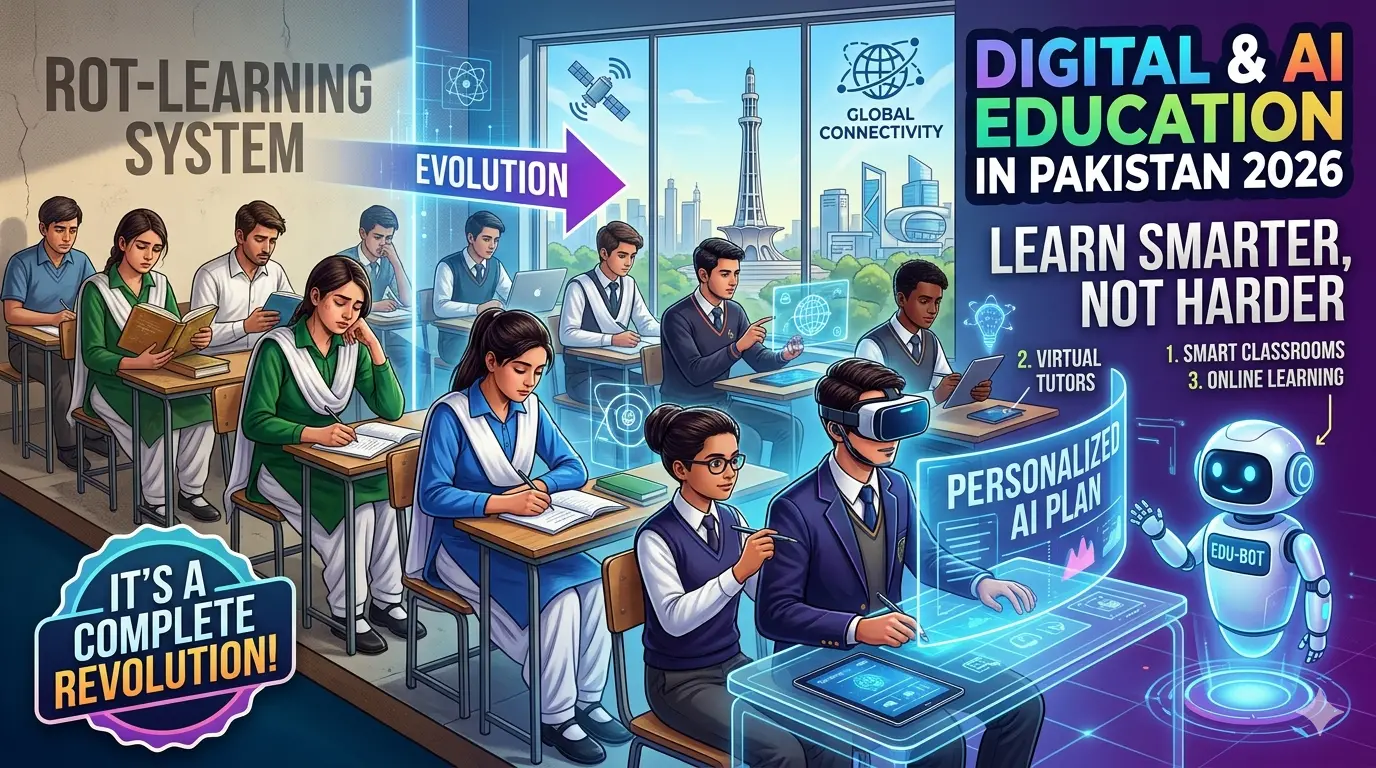
Digital and AI Education in Pakistan 2026 is undergoing a major transformation and this change is more powerful than ever before. The traditional method of learning, which was mostly based on memorization and textbook reading, is now slowly being replaced by modern digital tools and artificial intelligence (AI). This shift is not just a small update it is a complete revolution in how students learn, how teachers teach, and how schools and universities operate.
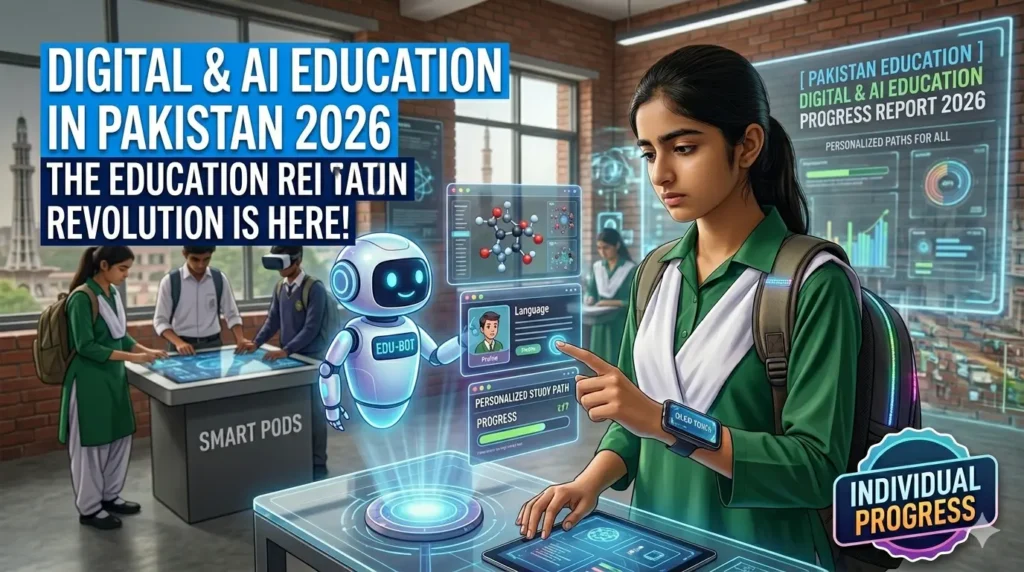
In today’s world, technology has become an essential part of everyday life. Students are no longer limited to physical classrooms or printed books. Instead, they now have access to online learning platforms, video lectures, digital notes, and smart applications that make learning easier, faster, and more interactive. This is what we call digital education, and it is rapidly growing in Pakistan’s education system.
Along with digital learning, Artificial Intelligence is also playing a very important role. AI-powered systems can analyze student performance, identify weak areas, and even suggest personalized study plans. This means that every student can learn according to their own pace and ability, instead of following a one size fits all system. Teachers are also benefiting from AI tools that help them manage classes, check assignments automatically, and track student progress more efficiently.
Another major reason behind this transformation is the increasing demand for modern skills in the job market. Today’s industries require students who are not only educated but also skilled in technology, communication, and problem-solving. That is why educational institutions are focusing more on digital literacy, coding, and AI-based learning methods.
Digital and AI Education in Pakistan 2026
In Pakistan, schools, colleges, and universities are gradually adopting smart classrooms, learning management systems (LMS), and online education platforms. This is making education more accessible, especially for students in remote areas who previously had limited resources.
Overall, digital and AI education is shaping a new future for students in Pakistan. It is creating a learning environment that is more flexible, interactive, and skill oriented. As this system continues to grow, it will prepare students for a competitive global world where technology plays a central role in every field of life.
What is Digital and AI Education?
Digital education means learning through electronic devices like computers, tablets, and smartphones. It includes:
- Online classes
- Video lectures
- E-books
- Learning Management Systems (LMS)
Artificial Intelligence (AI) in education means using smart systems that can:
- Track student performance
- Suggest personalized study plans
- Help teachers manage classrooms
- Automatically check assignments and tests
Together, Digital + AI education creates a smart learning environment.
Rise of Smart Classrooms in Pakistan
Many schools in Pakistan are now moving towards smart classrooms.
These include:
Interactive whiteboards
Projectors and multimedia tools
Digital attendance systems
E-learning content
This makes lessons more interesting and helps students understand concepts easily instead of just memorizing them.
Role of AI in Modern Education
Artificial Intelligence is playing a major role in changing education.
Personalized Learning
AI analyzes student performance and suggests what they should improve.
Virtual Tutors
AI-based apps help students learn anytime, like a personal tutor at home.
Smart Assessment
Teachers can save time because AI can automatically check quizzes and MCQs.
Progress Tracking
Schools can easily monitor student progress using digital systems.
Online Learning in Pakistan
After COVID-19, online education has become more popular than ever.
Now students can learn from:
- YouTube educational channels
- Online courses (IT, freelancing, English)
- School LMS portals
- Mobile learning apps
This has made education flexible and accessible for everyone.
Benefits of Digital and AI Education
Digital education is improving learning in many ways:
Better understanding through visuals
Flexible study time
Skill-based learning
Easy access to education
Equal opportunities for rural students
Most importantly, it helps students move away from rote learning (ratta system) and focus on understanding.
Challenges in Pakistan
Even though the system is improving, there are still challenges:
Internet issues in rural areas
Lack of devices for students
Limited teacher training
Online distractions (social media, games)
These problems need to be solved for full success of digital education.
Future of Education in Pakistan
The future of education is clearly digital and AI-based.
In the coming years, Pakistan may see:
- Fully digital classrooms
- AI-based exams and grading
- Virtual Reality (VR) learning
- More coding and IT subjects
- Smart universities with online systems
Students who learn digital skills today will have better careers tomorrow.
Impact on Students
This new system is very important for students because:
- It reduces memorization pressure
- Builds practical skills
- Improves creativity and thinking
- Prepares students for global jobs
Role of Teachers
Teachers are also becoming more modern in this system.
Now they:
- Use digital tools for teaching
- Guide students in online learning
- Track performance using AI systems
- Focus more on concept-based learning
Conclusion
Digital and AI Education in Pakistan 2026 is clearly shaping the future of learning in a very positive way. What we are seeing in 2026 is not just a small change in the education system, but a complete shift towards modern, smart, and technology-based learning. Students are now moving away from the old rote learning method and starting to focus more on understanding concepts, practical knowledge, and digital skills.
With the help of AI tools and digital platforms, learning has become easier, faster, and more interesting. Students can now study from anywhere, access online lectures, and even get personalized help through smart systems. On the other hand, teachers are also benefiting from these technologies as they can manage classes more efficiently and understand student performance in a better way.
However, this change also brings some challenges like internet issues, lack of resources, and need for proper training. But still, the overall direction is very positive and promising.
If Pakistan continues to move in this direction, the future generation will be more skilled, more confident, and better prepared for global competition. In simple words, Digital and AI Education in Pakistan is not just improving education—it is building a smarter future for every student in the country.