
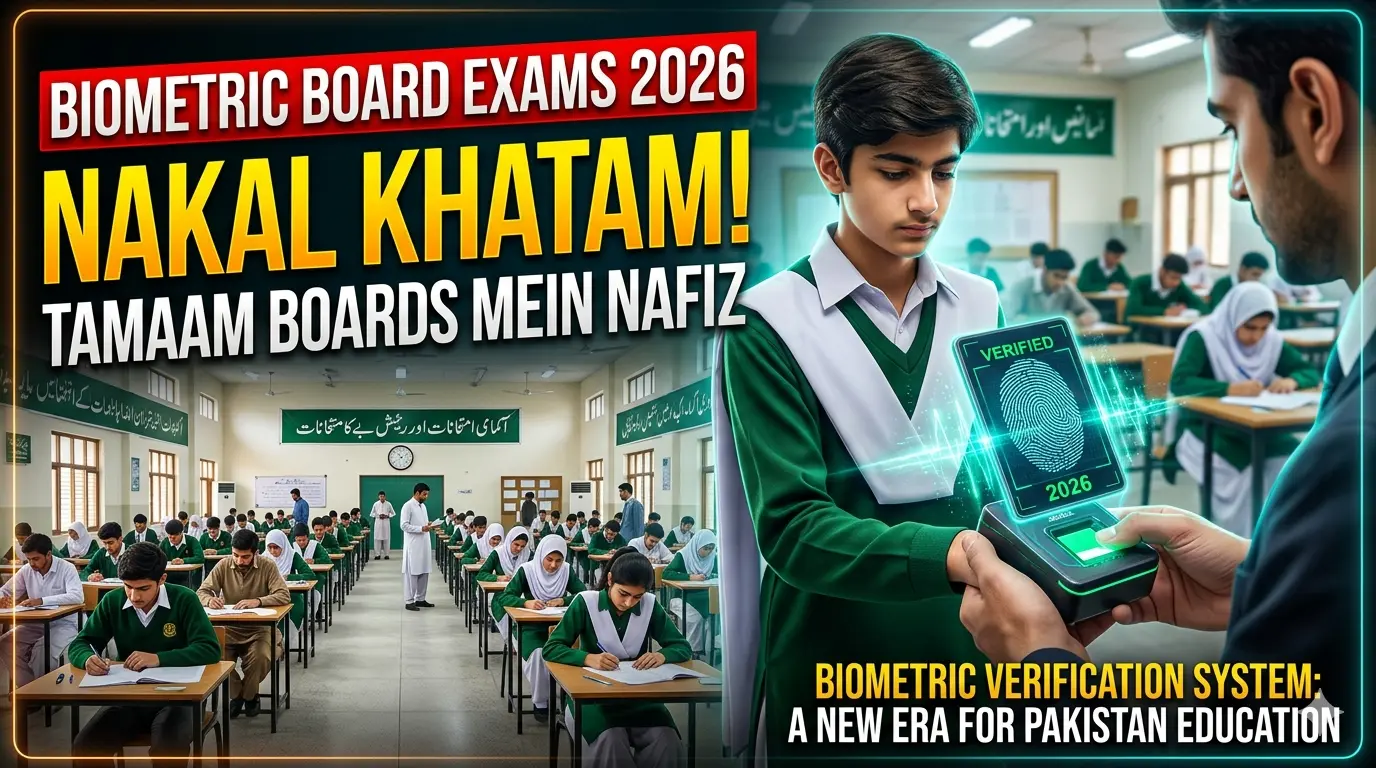
Biometric System in Board Exams 2026 is expected to become one of the most important updates in Pakistan’s education system. Over the last few years, education authorities have been trying to make board examinations more transparent, secure, and fair for students. Because of this, new technologies are gradually being introduced in the examination process.
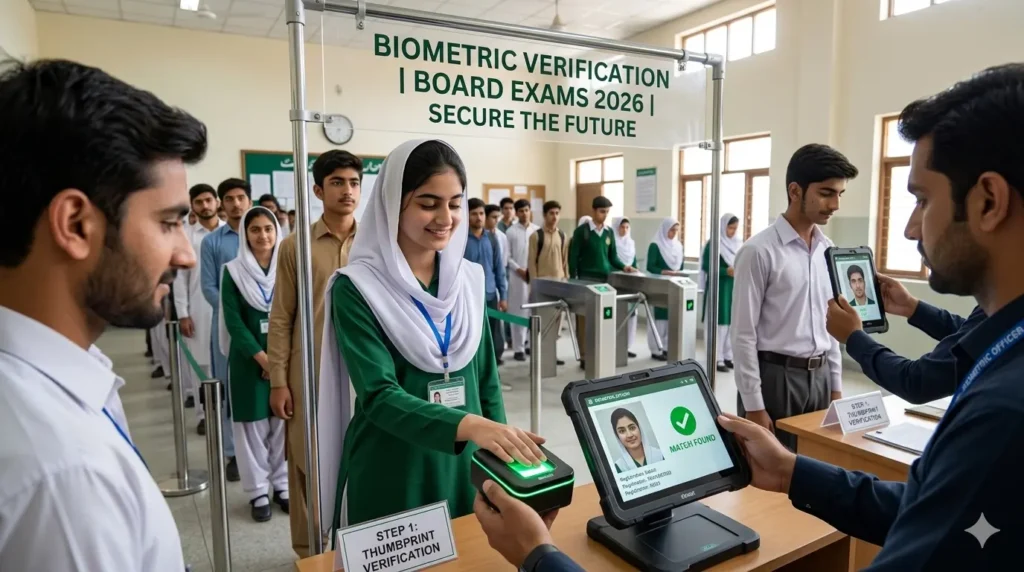
One of those technologies is biometric verification in board exams, which may soon become part of the exam entry procedure in several education boards. The main goal of this system is simple: to ensure that only the registered student appears in the examination and to eliminate unfair practices such as impersonation or fake candidates.
For many years, education boards in Pakistan have faced complaints related to exam fraud, cheating networks, and identity manipulation. In some cases, people even appeared in exams on behalf of other students. These incidents raised serious questions about the reliability of the examination system.
To tackle these challenges, authorities are now considering biometric verification technology at examination centers. This modern solution can help restore trust in board exams and improve the credibility of results.
In this article, we will explain how the biometric system in board exams 2026 may work, why it is being introduced, its benefits and challenges, and what students should know before appearing in exams.
What is the Biometric System in Board Exams?
The biometric system is a technology used to identify individuals using their unique biological characteristics. The most common example is fingerprint verification, although some systems may also use facial recognition.
In board examinations, biometric verification may be used to confirm the identity of students before they enter the examination hall.
In simple words, the system checks whether the student appearing in the exam is actually the same person who registered for it.
This approach is already used in many sectors in Pakistan, such as banking, SIM registration, and government verification systems. Now, education authorities are exploring the idea of using it in examinations as well.
How Biometric Verification May Work at Exam Centers
The biometric process is expected to be simple and quick so that it does not cause delays for students on exam day.
Here is how the process may work:
- Students arrive at the examination center before the reporting time.
- At the entrance, exam staff use a biometric scanner device.
- The student places their thumb on the fingerprint scanner.
- The system compares the fingerprint with the data stored in the board database.
- If the record matches, the student is allowed to enter the examination hall.
The verification process usually takes only a few seconds, but it adds a strong layer of security to the examination system.
Why Pakistan Is Introducing the Biometric System in Board Exams 2026
There are several reasons why education authorities are moving toward digital exam verification systems.
Preventing Impersonation
One of the biggest problems in traditional examination systems has been impersonation. In some cases, another person appears in the exam instead of the actual student. Biometric verification makes this practice extremely difficult.
Eliminating Fake Candidates
With biometric identification, only authentic and registered students can appear in the exam. This helps maintain fairness in the education system.
Increasing Transparency
When a digital verification system is used, the entire examination process becomes more transparent and trustworthy.
Strengthening Exam Security
Biometric verification adds an extra security layer at exam centers, reducing the chances of manipulation or fraud.
Education Boards That May Introduce Biometric Verification
The biometric system in board exams 2026 may be implemented gradually across different boards in Pakistan.
Some major boards that could introduce such systems include:
- Board of Intermediate and Secondary Education Lahore
- Board of Intermediate and Secondary Education Multan
- Board of Intermediate and Secondary Education Faisalabad
- Board of Intermediate and Secondary Education Gujranwala
- Board of Intermediate and Secondary Education Bahawalpur
Initially, the system may be tested in selected examination centers before being expanded to all centers.
Benefits of the Biometric System for Students
At first, some students might feel unsure about new technology in exams. However, the biometric system can actually bring several benefits.
Fair Competition
When strict verification systems are used, hardworking students get fair opportunities without being affected by unfair practices.
Faster Identity Verification
Biometric scanning is faster than manual checking of documents.
Secure Examination Environment
The system improves exam security and reduces the chances of fraudulent activities.
Greater Trust in Board Results
When the examination process becomes transparent, students and parents gain more trust in the final results.
Possible Challenges of the Biometric System
Although biometric verification offers many advantages, there may also be some challenges during the early stages.
Technical Issues
Like any technology, biometric devices may occasionally face technical problems such as scanner errors or connectivity issues.
Large Number of Students
Managing thousands of students at busy exam centers could require multiple devices and proper planning.
Awareness Among Students
Some students may not be familiar with biometric verification and may need basic guidance on how the system works.
However, these challenges are usually temporary and can be managed with better infrastructure and training.
What Students Should Do Before Biometric Verification in Exams
If biometric verification is introduced in board exams, students should follow a few simple steps to avoid problems on exam day.
Arrive Early
Students should reach the exam center early to complete the verification process without rushing.
Bring Important Documents
Always carry your roll number slip and required identification documents as instructed by the board.
Follow Exam Staff Instructions
Listen carefully to the instructions given by exam officials during verification.
Keep Your Thumb Clean
Since fingerprint verification may be used, students should ensure their thumb is clean and dry for accurate scanning.
Future of Digital Exams in Pakistan
The biometric system is only one step toward the digital transformation of the education sector.
In the coming years, education boards in Pakistan may also introduce:
- E-marking systems for checking answer sheets
- Computer-based examinations
- Online exam management systems
- Automated result processing
These changes aim to make the education system more modern, transparent, and efficient.
Frequently Asked Questions (FAQs)
What is the biometric system in board exams 2026?
The biometric system in board exams 2026 is a verification method that uses fingerprint scanning or biometric data to confirm the identity of students before entering the examination hall.
Why is biometric verification being introduced in board exams?
Biometric verification is introduced to prevent impersonation, eliminate fake candidates, and improve transparency in the examination system.
Which boards may introduce biometric verification in exams?
Several boards in Pakistan may gradually introduce biometric verification, including Lahore, Multan, Faisalabad, Gujranwala, and Bahawalpur boards.
Conclusion
The biometric system in board exams 2026 represents a major step toward improving the transparency and reliability of Pakistan’s examination system. By using fingerprint verification and modern digital technology, education authorities aim to prevent impersonation, ensure fair competition, and strengthen trust in board exam results.
Although the system may face some challenges during the initial phase, its long-term benefits are significant. A secure and transparent exam environment benefits not only students but also teachers, parents, and educational institutions.
As technology continues to reshape the education sector, biometric verification may soon become a standard part of the examination process in Pakistan. Students should stay informed about official updates and follow board guidelines to ensure a smooth and successful exam experience.